July 14, 2026
What I Learned After Interviewing People Around Hoboken About Modern Dating
People are longing for connection. Real, authentic connection.

It’s no secret that we live in a time where technology has become a must have. Not a “nice to have.” A must have. Technology has not only made everything convenient, from digesting media to automating your homework, but it has also made us heavily dependent. You often ask yourself why drive all the way to see someone when you can just FaceTime them from under the covers in your bed. But in doing so, you miss the fact that you haven’t seen them in months.
Now I’m a chemical engineer by trade, so sometimes I don’t see the world from an abstract lens. But I think it’s fair to look at a little bit of the science behind technology. I can't help but think of Sir Isaac Newton's Third Law, which states that every action has an equal and opposite reaction. I see no difference in today’s technological landscape.
As technology has advanced and made our lives easier, it’s also made us less willing to interact with the real world. People constantly trade real conversations for texts, introductions for swiping, and shared experience for endless scrolling. It’s hard to avoid, I admit I am glued to my computer for a large part of the day.
So this past weekend, I decided to take a step away from the coding.
Instead of building the product, I wanted to better understand the people for whom I was building it. I strolled around Hoboken, spoke with strangers along the waterfront, visited local bars to discuss potential partnerships all to ask one simple question: How has technology changed the way we meet people?
Why Understanding Your Market Is More Important Than Building the Product
As founders, it is imperative to trust your instincts to take the necessary risks. But, there is nothing worse than building something that no one wants. And you have to go beyond your friends and family — people who are going to tell you what you want to hear.
The reality is consumers care about one thing and one thing only: their experience. Think about all the times your phone lags, prompting an “I hate this thing” or a “I paid for what?” interjection. But when’s the last time you actually empathized with the process that goes into building your gadget? No user ever steps back and says, “You know what, my phone is slow, but there's hundreds of thousands of lines of code and databases that Apple deals with, so I totally get it.” No, you’d be a fool to ever say that in front of your friends.
This is the part I’ve learned more and grown to appreciate as I have built Destiny Rings. The sheer legwork that goes into fixing one minor error, one button on a screen being a few pixels off. The amount of work to rectify things is beyond what one would imagine, but at the end of the day, no one cares.
Which is why it is essential to make the customer happy first and figure out what they want. As much as you and your best friends dig your product, a dreadful UX can kill it dead in its tracks. The best products aren't built by founders who assume they know the answers. They're built by founders who spend time listening before they spend time building.
“The best products aren't built by founders who assume they know the answers.”
Bright Ideas From a Sunny Day in Hoboken
One thing a first time solo founder learns is that as much as you think you’re in control, you’re not. Inevitable roadblocks across different domains: app store approval, patent filings, prototype shipments leave you constantly having to adapt and find ways to be productive. Where I’d been putting all of my energy into building the vision, I wasn’t focused enough on selling it.
I decided to take a day trip to Hoboken, NJ, our targeted launch city for Destiny Rings. An hour and a half later, through pockets of traffic, I pulled into the waterfront parking garage with one simple goal in mind: talk to people.
It started with a short list of bars that I planned to hit. I had a ChatGPT refined script in my head about what my pitch was going to be and what a potential partnership would look like. But in walking through the doorway to Black Bear Hoboken, I remembered the very message I’m trying to convey to you: real-world connection and authenticity.
“There’s an exciting new product brewing right here in Hoboken helping people meet in real life.” But wait, that wasn’t in the script. That was nothing like ChatGPT told me to say. But it didn’t matter. Having those face-to-face authentic conversations was not only refreshing but got bar managers and owners a lot more excited. I hit the 5 bars I planned on stopping by, but ended up spending 3 hours popping into 18 of them. Many of them loved the idea and asked for my contact, excited by the idea of a potential launch event partnership. I realized people weren't buying into my script. They were buying into my excitement.

Feeling good about the seeds I planted, I pivoted to something I had been wanting to do for a while — interview people and get their thoughts. I walked over to the waterfront, greeted by a beautiful open field — hundreds of people sitting and enjoying their picnics.
The first couple didn’t go according to plan, but eventually I got a few people eager to share their thoughts and listen about my product. After a handful of conversations, a pattern started emerging.

Five Things People Kept Saying
“People have too many options on dating apps.”
When you reduce a person to a singular card in a stack, it’s easy to blow them off. Dating apps have gamified how we view connections. Every like you get, every match, it becomes just a number rather than something meaningful. It’s hard to find a true connection with someone online when they have 20 other options blowing up their phone.
“The algorithm doesn’t push profiles sometimes” — out of your control.
The trade secret that no dating app ever reveals is how they determine which profiles to show. Several people felt like they were at the mercy of an algorithm. They weren't sure why some weeks they'd get plenty of matches while other weeks it felt like their profile disappeared.
“There are a lot of catfishers.”
You feel that rush — finally one of your matches is about to date you in real life. Then you see them in real life and it’s a whole different person. With AI tools to enhance photos or even some people outright uploading fake photos, technology has made it easy to hide behind a screen.
“People have misaligned intentions on dating apps.”
While dating apps are advertised to help you make genuine connections, they are often hijacked by people who want a quick fix. Hookup culture trumps all across online dating platforms, leaving many who want a real connection dissatisfied with the overall experience.
“Safety is the biggest concern.”
No matter how exciting it is to meet someone new, safety remains the biggest concern. Nearly everyone I spoke with mentioned some form of hesitation when meeting people online, even in person for the first time. Whether it's wondering if someone's photos are real, questioning their intentions, or simply feeling uneasy about meeting a complete stranger, those concerns never fully disappear. Dating platforms should do more than facilitate matches—they should make users feel confident and secure throughout the entire experience.
“Every conversation either strengthens your vision or forces you to rethink it.”
How It Changed the Product
Returning to my car, I realized something important. None of the conversations completely changed my vision for Destiny Rings, in fact they reinforced my exact reasons for building it in the first place.
The frustrations people shared weren't just one-off cases. They were recurring themes from complete strangers who had never spoken to each other. People were tired of endless swiping, frustrated by algorithms deciding who they could meet, worried about fake profiles, and looking for a safer, more authentic way to connect.
It also reminded me that building a startup isn't just about writing code or designing hardware. It's about constantly validating your assumptions. Every conversation either strengthens your vision or forces you to rethink it. Now whichever way it goes, it doesn’t really matter. Both are valuable.
I'll continue making trips like this as Destiny Rings evolves. The easy thing to do is spend all day behind a computer convincing yourself you know what exactly customers want. It's much harder, but infinitely more valuable, to walk outside, start conversations with strangers, and let them shape the product you're building.
Nothing Matters Except What the People Want
If there's one lesson I've learned as a founder, it's this: if customers disagree with you, you’re wrong.
You can spend months perfecting a feature, iterating a design, or chasing technical perfection, but none of it matters if you're solving the wrong problem. The best ideas don't come from sitting behind a computer — they come from going out there and listening.
That's why I'll continue getting out into the real world, talking to strangers, interviewing users, and ultimately letting those conversations drive the journey of Destiny Rings. Every authentic conversation is another opportunity to build something people genuinely want, not just what you think they want.
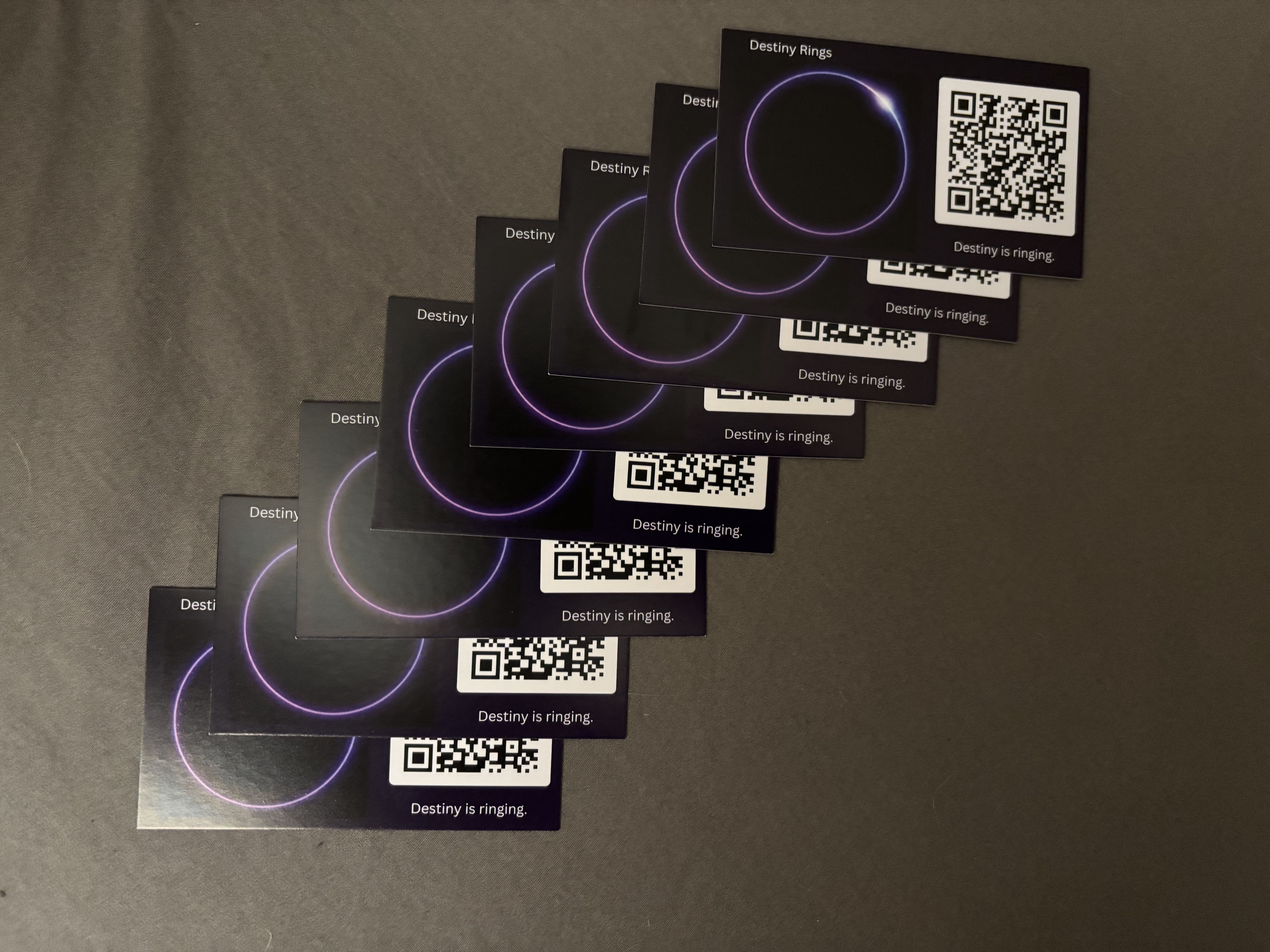
If you'd like to follow the journey, I'd love for you to join the Destiny Rings waitlist. And if you're interested in sharing your thoughts on modern dating, technology, or meeting people in real life, I'd love to hear from you. Some of the best product decisions start with a simple conversation.

Written by
Jayson Shin
Founder of Destiny Rings. Building wearable technology that helps people spend less time searching through profiles and more time noticing the people already around them.
“Technology shouldn't replace chemistry.
It should simply give chemistry a chance.”
Continue Exploring
Join the Destiny Rings Early Access Waitlist
Be one of the first to follow the journey before our first launch.
Join the WaitlistDestiny is ringing.